
My cousin has built a small end-of-day routine around a foam roller and a weighted blanket, and while neither is a magic fix, she says the combination genuinely makes the transition from an active day to actual rest feel smoother.
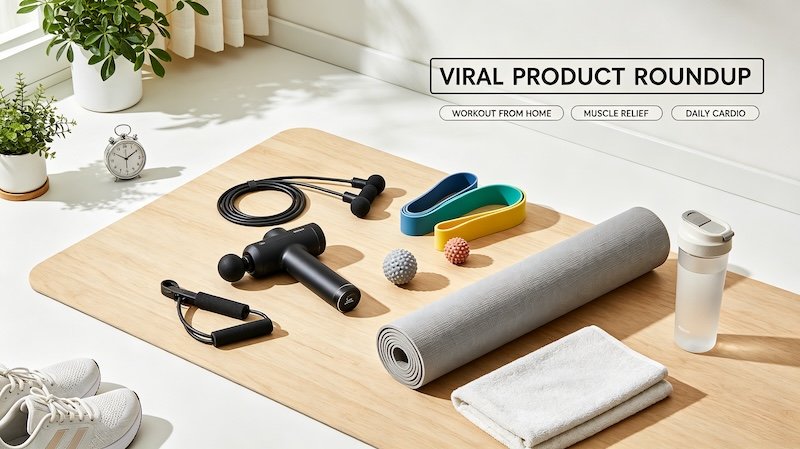
Recovery as Part of the Routine
The recovery and wellness gadgets that hold up tend to fit into a short, repeatable routine rather than requiring a big time commitment.
- Foam roller
A cylindrical roller used for self-massage and muscle recovery after workouts.
- Compression leg sleeves
Fitted sleeves worn to support circulation during or after exercise.
- Cooling gel eye mask
A reusable mask kept chilled and used for a short relaxation break, common in wind-down routines.
- Acupressure mat
A mat with small pressure points used for relaxation, typically for short sessions lying down.
- Weighted blanket
A heavier blanket marketed for calming, deep-pressure comfort, often used as part of a wind-down routine.
Building a Realistic Recovery Routine
Pairing recovery tools with consistent home workout gear use tends to matter more than any single recovery gadget on its own. It’s also worth checking out 10 Viral Fitness Gadgets Worth Buying.
FAQ
Do recovery gadgets actually help with soreness?
Many people find tools like foam rollers genuinely helpful for muscle recovery, though results vary by individual and use.
Are wellness gadgets like weighted blankets backed by evidence?
Some, like weighted blankets, have general support for calming use, though results vary by individual.
How often should recovery tools be used?
It depends on the tool and your activity level, so checking product guidance and starting gradually is a reasonable approach.
Are recovery and wellness gadgets a substitute for rest or sleep?
No, they’re best used to complement rest, not replace consistent sleep and recovery habits.