
I replaced a set of resistance bands after one finally snapped mid-stretch, and the thicker, reinforced set that replaced it made an ordinary home workout feel noticeably more solid — a small upgrade that ended up mattering more than expected.
What Actually Matters Beyond the Video
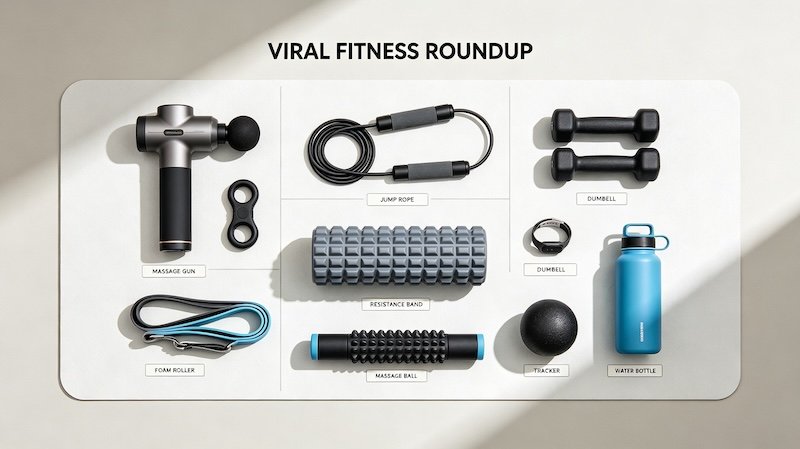
Beyond how a set looks in a video, resistance range, material durability, and adjustability are the details that determine whether it holds up in daily use.
- Check the resistance level range
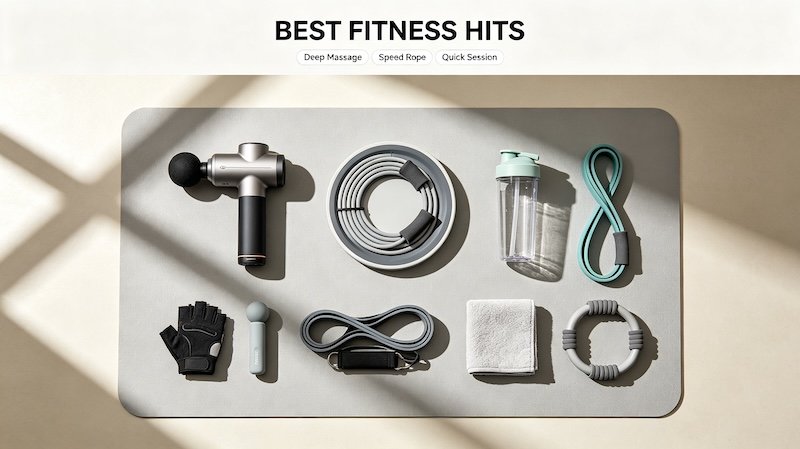
A set with multiple resistance levels adapts better to different exercises than a single fixed band.
- Look at material for durability and snap resistance
Thicker, reinforced latex or fabric bands tend to hold up better to repeated stretching than thin ones.
- Check grip tool tension adjustability
Adjustable grip strengtheners allow progress over time, unlike fixed-tension tools that are outgrown quickly.
- Read reviews mentioning long-term wear
Reviews describing weeks or months of regular use are more useful than early impressions for judging durability.
Rounding Out a Routine
Bands and grip tools pair naturally with the kind of recovery and wellness finds that help a routine actually stick. For more on this, see 10 Viral Fitness Gadgets Worth Buying.
FAQ
Do resistance bands actually build strength effectively?
Yes, for many exercises they provide a genuine training stimulus, especially for home workouts without weights.
How do I know which resistance level to start with?
Starting with a lighter band and progressing as exercises feel too easy is a reasonable, low-risk approach.
Are grip strengtheners worth it for general fitness, not just grip sports?
They can be a useful low-effort addition, especially for anyone who wants to build forearm strength during downtime.
Do resistance bands wear out over time?
Yes, especially with frequent use, so checking for small tears or thinning periodically is a good habit.